Thursday, March 15, 2007

One Standard For All Socialists

CYFSWATCH got shut down because some commenters made threats of violence against Green MP Sue Bradford. Bradford shrieked to the Police, claiming that she feared for her personal safety.

Yet over at that paragon of pinko sensibility, Millsy gets his own back. Claiming that the National Party wants to preserve the right to beat people, he ranges across threats of physical violence, racism, and religious hatred:

"The fact of the matter is:IF PARENTS REALLY LOVED THEIR KIDS THEY WOULD STOP HITTING THEM.

The National party are a bunch of violent fuckheads who dont care about a kids right to be free of violence. I think they get off on beating their kids, nothing like bashing a child with an iron bar for spilling the milk to make you feel better. Taito Philip Field is a typical child beating coconut ape who, with his race need to go back up the trees where they belong, and, we need to push violence out of this country RIGHT NOW!

HITTING CHILDREN IS WRONG, and the sooner these coconuts, white trash bogans, scruffy Old-Testamenters and white-middle-class-closet-nazis realise this, the better.

Its time we moved into the 21st Century folks. A new order, where violence is frowned upon.
Posted by millsy : 3/14/2007 10:30:00


But Millsy isn't finished, even after a telling-off from Idiot Savant:

"That fucking Garth George is a fucking wanker, wanting to protect parents who bash their children. I hope one day that someone bashes hime like he bashes his kids. Teach that intolerant bigot a good fucking lesson. People like him need a good thrashing. And that bitch who used the horse whip on her son, thinks she can use violence to coerce her children with the threat of the stick. It probably turns her on, giving her kids a beating.

"New Zealand disgusts me. We seem to be addicted to violence in the home, beating children on a whim.

"Posted by millsy : 3/15/2007 08:54:00 AM "

Long Live Joseph Stalin.

Thursday, March 08, 2007

In-Flight Safety

Occasionally I find that my personal views inhibit my social life. One such instance occurred in a bar in Auckland recently, where I was chatting up a hot Emirates hostess.

The conversation started with my criticism of the in-flight safety announcements.

"Why is smoking in the toilet a fire hazard?" I ask.

"Because the plane could catch fire," she answers, in that vacuous, I-haven't-thought-deeply-about-this-but-that's-what-they-told-me-at-hostess-school kind of way that air hostesses all seem to possess. I have noticed that there is something quite particular about the mentality of flight hostesses, which they share in common with Labour Party MPs: the unrivalled ability to spout platitudinous nonsense. There's no justification for pinko politicians on the public payroll to come up with this rubbish, but at least I can understand why air hostesses are so dumbed down. Day in and day out, they are forced to be polite to often obnoxious passengers, responding to such inane questions as: "Is this chicken or beef?" Or: "What does the non smoking light mean?" In a social context, my experience of air hostesses is that conversation almost exclusively revolves around where they have landed from, and what their next destination is.

But I am not satisfied with this answer. "So smoking in the toilet is a fire hazard, but smoking in the cabin is not?"

"No," she answers. "Smoking in the cabin is also a fire hazard."

"I see," I say. "So how come for forty years smoking in the cabin was allowed, and of all the millions of flights, not one plane ever crashed because a passenger was smoking?"

"I don't know," she responds.

I wasn't trying to ask annoying questions, of course. So I gave her a way out of the argument. "I can understand that the in-flight air conditioning system may not be totally efficient, and non-smoking passengers dislike the smell of cigarette smoke. Wouldn't it be more honest to say that smoking on planes irritates non-smoking passengers, rather than claim that the plane will crash if somebody lights up in the toilet?"

Emirates girl wasn't prepared to concede this point. So I progressed to the issue of lifeboats on planes.

"What is the point of lifeboats on a Boeing 747?" I ask.

"They're in case a plane lands on the water," she says politely. I buy her a drink, because she's hot, and come back to the conversation.

"Are there enough lifeboats for every passenger?"

"Yes, of course," she answers.

"Are they very useful, these lifeboats?"

"Yes, they're a key part of in-flight safety," she says.

"I see." I take a swig of my drink, and then say: "How many planes have ever used these lifeboats?"

She doesn't know what I mean. So I expand on this. "Well, put it this way. You spend ten fucking minutes during take-off telling us where the exits are, and where the lifeboats are, when every passenger airliner that has ever crashed into the water has lost everybody on board."

She wasn't amused by this, but she's still smiling politely.

"We need to put passengers' minds at ease."

I say it isn't helpful to give passengers the inaccurate impression that if a 350 tonne airplane hits the water at 300 miles an hour, the plane will somehow remain intact, and the passengers able to walk off into their lifeboats.

"If a plane's going to crash in the middle of the Pacific Ocean, nobody's actually going to survive to deploy the lifeboats, are they?" I say.

It is at this point that she starts to feel defensive. Being the not-very-sensitive guy that I am, I don't notice this. It doesn't occur to me that after four years of working for Emirates, she herself has found comfort in the existence of lifeboats. So I continue.

"And what's the point of showing passengers where the fucking exits are? Don't you think, just maybe, that a passenger who does happen to survive a massive plane crash might just jump out of the BIG FUCKING HOLE IN THE PLANE, rather than calmly follow the other passengers along the lights to the designated exit?"

The conversation ended shortly afterwards. Bloody pity, really. Emirates Girl was hot.

Thursday, March 01, 2007

Where is CYFS when you need them?

This nutjob, when she's not spending all her days listening to the radio, instead of out working productively in society, is babysitting.

Who the fuck breaks down in tears when reading Dr Seuss to a baby? And who the fuck leaves such babies in the care of such warped people?

Work for the dole would do her a helluva lot of good.

Wednesday, February 28, 2007

Pull Finger!

There are plenty of opportunities for the Nats to sink the spoon into this sordid bunch of sorry socialists. One of the most frustrating aspects of being a loyal National Party member is seeing them miss the boat.

Here we are with the kick off of a $1.5 million rates inquiry, which deliberately misses the key point—and we have not a whisper of protest from National’s Local Government spokesmen John Carter and Mark Blumsky. Well, boys, get off your lazy arses and start doing your fucking jobs.

National’s local government policy, as far as policies go, is a reasonable document--particularly surprising since it was written by Nick Smith, and is two years old. But it misses out on key issues, and is in need of dire reform. It spends far too much time talking about “consulting” with local government, while local government continues to waste increasing amounts of ratepayers’ money at alarming rates. Local Government doesn’t need “consultation”. It is a slimy cesspool of mediocre socialist politicians who hide behind vast layers of bureaucracy to intervene in ordinary ratepayers’ lives. We’ve gone well beyond the time for consultation. What New Zealand needs is a tough minister to go in and take a big fucking axe to the useless fuckers.

National's challenge in Government will be to pick off policy areas that directly send the socialists squealing and send them into disarray. New Zealand voters have no great sympathy towards the unaccountable never-beens that make up local authority “elected” representation. It’s time to sock it to the buggers.

One of the many lessons of Margaret Thatcher’s greatness was her ability to identify the things that whip the pinkos into a lather. Her reformation of local government in the late 80s—local government that at the time had far more responsibilities devolved to them than New Zealand ever had—was, in part, about putting a lid on some of the mindless socialist mess-ups of the time. Where Thatcher failed was that she didn’t clamp down on the socialist-dominated local authorities’ power to spend.

And here lies the great fiasco that is the Government’s inquiry into local government funding. It is a pointless talk-fest that will spend months coming up with different economic models for how to rate and pay for local government services. Who pays, and with what mechanism, doesn’t actually matter.

It’s their bloody spending that is the problem.

Local Government is rotten to its core. The degrees of bureaucracy required to do anything, apparently in the name of democracy, have created a whole new, and vastly expensive, organizational model: the consultocracy. The requirement to consult with the community, and every competing organisational unit, over even the most thoroughly trivial of developments, places colossal burdens on the ratepayer. Special interest groups need to be included in decision-making for no other reason than they will make noise if not included. In a town like Auckland, there are a lot of special interest groups.

The industry that feeds off this system is wasteful in the extreme, with no external pressures or motivations to act efficiently. Take the case in point of a friend of mine, the manager of a major project in the Auckland region. He was appointed last year, and, being new to the Council, had little knowledge about how the Council operated. In his project team were a group of external consultants, who had been hired by his general manager. As part of this project, he was required to put out a tender for consulting advice on a key aspect of the project. He asked his manager whether it was appropriate for him to go to the Council’s internal procurement office to work out the tender process on that advice. His manager told him to use another external consultant to provide that external tendering advice.

Thus when the external consultant gave the wrong advice about how to go about administering a tender process for external consultancy services, the project manager called the procurement office. The correct advice on the tender process for external consultancy services was given within two minutes. Thus the waste of $15,000 on faulty advice by a consultant on internal council processes. The consultant in question continues to be retained by the project manager, on the basis that she has indispensable relationships formed over fifteen years as an external consultant to Council.

Auckland Regional Council’s expenditure remained static for ten years up until 2001. In the last five years, the Council’s spending has doubled. Auckland City Council—again static over the previous period, but up 60% in the last five years. Bay of Plenty Regional Council—up by 150% over the same period. Canterbury Regional Council’s spending is up by 70%. All in all, local authorities spend over $5 billion—about 4% of GDP—on local authority services. That compares with $3.5 billion in 2000, and $2.8 billion way back when Statistics started keeping records in 1993.

All the while, the asset base of local authorities has ballooned in the last six years, as trivial little empire-builders have self-perpetuated an asset portfolio of $44 billion in 2000, to a whopping $80 billion this year.

Not that Auckland City Councillors actually feel the pinch when they pay their rates bills. The socialist-dominated Council is full of middle-class pinkos—with the sole exceptions of Leila Boyle and Bill Christian—who live in million dollar homes.

They are, in sum, a waste of bloody space.

Local Government is a creation of Parliament. It has, of itself, no legal power other than that which Parliament has given it. It is high time that Parliament stopped passing the buck for local authority excesses, and reined them in.

So in the interests of being constructive, here are some proposals that are so sensible Mark Blumsky and John Carter don’t even have to think about, and it will give them respect, gratitude of the public, and the enmity of every card-carrying Labour Party scumbag who seeks a cushy job in local government before joining Aunty Helen’s also-ran caucus.

  1. Take responsibility for the activities of Local Government. Stop passing the buck on wayward, overspending, inept and bloated councils by claiming that’s what local electors want. The degree of apathy by voters in local government is directly related to their frustration that nothing will change the irresponsible habits of empire-building petty politicians.
  2. Cut the number of local authorities from 86 to 6. There’s far too much inter-council squabbling, duplication of services, and electable opportunities for would-be meddlers. With one stroke of the pen, tell them to fuck off.
  3. Restrict each of the local authorities to ten elected representatives, elected by first past the post. At present the most obscure and petty-minded patch-protector gets elected, and reelected, by doing nothing more than promising a couple of neighbours that they will get their pot-holes fixed. It will also have the added effect of forcing some 500 socialists in elected council positions to get a real fucking job.
  4. Tightly define the core responsibilities of local government: water, wastewater, roading, and rubbish collection. All of these services should be tendered out. With just six local authorities, the services will have a critical mass for international best-practice supply of such services. Council’s role will be restricted to selecting the best service supplier.
  5. Reduce non-core responsibilities to no more than ten percent of total expenditure. Force the pinkos to cancel their empire-building pipe dreams that have nothing to do with the infrastructure of the region. Ten percent is more than enough to pay for libraries and parks.
  6. Require councils to reduce staffing levels by 30%. This is easily achievable by restricting the functions of local authorities to core requirements.
  7. Freeze rates for five years. With efficiencies from amalgamation, staff reduction, and a tight focus on core activities, there is no reason not to achieve this.
  8. Local government has no interest in creating competition in infrastructure services, and as the stadium debacle showed, councils are unable to separate their commercial interests from their civic interests. Require councils to sell off port and airport assets. The proceeds of the sales should be returned to individual ratepayers in annual installments over a ten year period. Ratepayers who would otherwise squeal that community assets are being sold and proceeds squandered by councils will be appeased by having the assets directly returned to them.
  9. Remove the building consents and RMA processes from local government. Instead, create one national organisation processing building consents. This will remove the vastly expensive inconsistencies between local authorities. Better yet, commercialise the consents processing entirely, and restrict the activity of a central agency to auditing and standards.
  10. Give the Minister of Local Government the authority to sack any council, and appoint a commissioner to sort out problems. The mere threat of intervention by the Minister will place a degree of restraint on their excesses.

Mark Blumsky, you have expressed frustration that you are unable to achieve anything as a National backbencher. Well, buddy, if you want to distinguish yourself, pull bloody finger and make a name for yourself by reforming one of the biggest fucking rorts in town.

Tuesday, February 20, 2007

Funding Our Future

Rob Cameron, one of the architects of the SOE model, has suggested that the ten largest SOEs partially float on the capital markets.

This is a good concept, but it’s not realistic under this government. Frankly, I doubt much that a John Key-led National government would partially list any of the SOEs, let alone the ten largest ones. Selling off state assets is seen as selling off the family silver at the expense of future generations.

State owned enterprises are an historical anomaly. They were set up during the Fourth Labour government to provide commercial structures and governance, in anticipation of privatisation.

State owned enterprises account for about $25 billion on the government’s balance sheet. Some of the largest—Meridian, Mighty River Power, Genesis Energy, and TVNZ, all face significant competition from the private sector.

There is little strategic argument for setting up a company with purely commercial imperatives, and then determining that the government should own those companies. TVNZ’s massive losses in value over the past few years can be attributed, on the one hand, to government interference into board operations, and a blind unwillingness to divest from a commercial entity that faces huge competition and high risk.

Again, we return to the core problem that politicians have: selling off SOEs is commercially sensible, but politically sensitive. It doesn’t matter how silly it is to own multiple competing energy generation companies—or even an airline.

There is another, much better option, which John Key should pursue. And it lies in the Super Fund.

Michael Cullen champions the Super Fund as his own. To be fair, it is one of the few significant economic achievements of this Labour Government. It has some $12 billion in assets, diversified across low and medium-risk investments in New Zealand and offshore. The taxpayer is contributing to its growth at the rate of a couple of billion a year. Its investment performance has been solid.

The Super Fund works because it operates outside of political interference. The super fund managers are professional fund managers. The guardians’ sole interest is in the economic performance of the fund. Even Helen Clark’s recent comments about investments in tobacco companies don’t matter a jot to the Super Fund guardians. And nor should they.

The Super Fund has now reached a size where it is untouchable politically. No politician can raid it to fund short-term, hare-brained schemes, and it is seen by the public as a legitimate means of securing New Zealanders' future. John Key's solution is to make it even harder to touch, and even more secure.

John Key should transfer all state owned enterprises to the Super Fund. This will have an immediate effect on the size of the super fund, into a significant public asset worth some $40 billion. The Super Fund guardians can then decide which of the SOEs to keep, which to partially or wholly divest from, and which to float on the capital markets.

While this will result in a direct reduction in the government's fiscal position--surpluses will be lower as profits from existing SOEs are moved to the Super Fund--it will also remove the need for the Government to make ongoing contributions directly to the Fund. The existence of a moderately-performing $40 billion super fund, earning 7% returns, will create an $80 billion fund over ten years--more than enough to cover the super liability bubble over the next forty years as baby boomers start drawing on it.

The positive effect on the capital markets as at least a dozen attractive, high-performing investments start trading domestically will make the New Zealand sharemarket immediately more viable for New Zealand investors.

There will be other options for establishing SOEs for a National Goverment--the ACC employers' fund is ripe for creation of at least two, and possibly three separate SOEs, with an additional $8 billion in assets that could be transferred to the Super Fund, thereby opening up ACC to private competition and investment.

It’s time to take the ownership of SOEs out of direct political interference, and place them in the actual interests of New Zealanders’ future.

Thursday, February 01, 2007

Dear Jeanette Fitzsimons...

Dear Jeanette Fitzsimons:

I have yet to see anything in the eleven years in which you have been in Parliament, which demonstrates in even the remotest sense, your contribution to New Zealand. I estimate that in real terms, you have earned over $3 million in your private salary, personal allowances, and superannuation (not to mention your very dodgy schemes--such as your Christchurch office which is owned by the Green Party and chartges rent to Parliamentary Services, which you in return use to fund your Green Party election campaigns)--with no net return to the country.

However, now is your chance to have a lucky break. Yes, Jeanette: I realise that you will soon also be entitled to receive National Superannuation, so I give you one lasting legacy to New Zealand.

Put a stop to this stupid bloody food miles junket. I've already heard far too many bloody pseudo-greenies, who are no less socialist than your very red self, proclaim the hazards of "food miles". As even your co-leader accepts, the food miles argument is a complete bloody crock.

So here is your solution. Go on a junket to Britain--if you accompany Judith Tizard you should be able to save on a companion fare--and tell those silly buggers in Britain off. Produce a new standard for food miles. Be the first person, internationally, to come up with an international measure, which actually presents the carbon footprint as it is. Make sure it favours New Zealand for once, rather than Europe.

Hell, we all know that the food miles theory was invented by European trade protectionists anyway, and cottoned onto by your ignorant pinko-greenie ideologues because they've become bored with protesting about other stuff. So go set the record straight. If they're going to be making food miles the new fad, give them some proper bloody information and some standards that favour us. Like, for example, how New Zealand lamb actually consumes less carbon than British lamb.

There's a good lass.

Kind regards,

Insolent Prick

P.S. I note you still get extra resources from the Labour Government in return for propping up those disgusting pinko liberals. Do you think you could please use your influence to see if the repulsive socialists have repaid the money they stole to buy South Island votes, and indeed the election last year?

Spongiformus Tizarditis

Life is not always easy for the Beehive staffer. Risks of the job include finger-cramps, public humiliation, and quite frequently, bouts of mental retardation. While the cut and thrust of representing relatively competent ministers with actual portfolios, such as David Cunliffe, Annette King, and Phil Goff must have their respective merits, the life of one of the lesser spin doctors must be particularly gruelling.

Take Judith Tizard's office, for example. In seven years of ministerial office, Tizard has never been promoted to Cabinet. She is the first ever Associate Minister for Arts and Culture. Her position of "Minister Assisting the Prime Minister on Auckland Issues" provides the excellent ruse to travel with the PM on the latter's domestic and international itinerary.

It's all a bloody shame, really. With Tizard's excellent breeding--her father a deputy prime minister and Finance Minister, who last distinguished himself in 1989, when as Defence Minister, he labelled the recently-deceased Japanese Emperor Hirohito a "war criminal"; and mother a mayor, governor-general, and perhaps most importantly, an entertaining panellist on Beauty and the Beast--it's a shame that so little has become of Judith Tizard.

Judith Tizard is Helen Clark's closest personal friend. While Tizard no longer resides at Premier House (she has obtained a separate taxpayer-funded dwelling in Thorndon), Tizard was Clark's electorate secretary for three years prior to entering Parliament. While working for Clark, Tizard also had the opportunity to finally finish her Bachelor of Arts in History. Of course, it did take eleven years to complete, which probably explains Tizard's immaculate modesty, generosity towards others, and her unwavering commitment to listening to both points of view.

What is harder to explain, however, is this post from one of Tizard's ministerial staffers yesterday. Since Tizard's office is staffed by a rather large number of people--at least seven press secretaries in the last few years--it's not easy tracking down who wrote it. But it deserves special attention. The comment reads:

Office of the Hon Judith Tizard said...
Could you please correct the entry for Judith Tizard as follows:
- IP lists Judith Tizard as "Auckland councilor" [sic]
- Judith served on the Auckland Electric Power Board (1977-1983), and the Auckland Regional Councillor for Panmure (1988-91);
- When Parliament is sitting, Judith resides in ministerial housing in Wellington - not at Premier House;
- Judith is Patron of 11 organisations including the Mt Wellington Women's Bowling Club and the Auckland Brass Band. She is an Honorary member of the Otahuhu & District RSA, and Honorary Vice-President of the Otahuhu & District Highland Pipe Band.

My response was:

Dear office of the hon judith tizard:

No correction necessarily. You have made the correction here. I'm not sure what your point is, precisely, but I can tell you this. We do not yet live in a society where ministerial offices dictate the tone and content of what is said about them.

Now go and do some bloody work. No doubt Ministerial Services pays you a bloody whopping great salary for you to do something somewhat more productive than act as editor of my blog.

Wednesday, January 31, 2007

The Welfare State

Back in November, I wrote a post on that other inconvenient truth, and the state of welfare dependency in New Zealand. In light of John Key's State of the Nation speech, I've cherry-picked the key recommendations for serious welfare reform:

  1. Requirement for all long-term unemployed to report to Work and Income at 9am daily to collect their benefit. Get them into the habit of getting out of bed.
  2. Pay a bonus of $2,000 to all women who have been on the DPB for more than two years, to get their tubes tied.
  3. Pay bonuses of $1000 to all fathers of welfare-dependent children to have vasectomies.
  4. Pay bonuses of $500 to WINZ staff for moving a long-term beneficiary from welfare into work. Bonus payable after six months of continuous employment by the beneficiary.
  5. Every child receiving welfare must have their father named on birth certificates.
  6. No welfare entitlements to the father of children living with mothers on the DPB.
  7. Non-custodial fathers must be in paid employment, and must make minimum contributions of $50 per week.
  8. Fathers not permitted to leave New Zealand while children living with a dependent DPB beneficiary.
  9. Children must attend school. Non-attendance would lead to the benefit being cancelled.
  10. All children must receive medical check-ups at least every six months, to check on the nutritional and general health status of the child.
  11. Random alcohol and drug checks of long-term welfare beneficiaries.
  12. No violent offenders permitted to live in the same home as children of welfare beneficiaries.
  13. A maximum six months of entitlement to the unemployment benefit in any five year period, and a maximum of two years’ entitlement to the DPB for any person in their lifetime.
  14. Frequent, random checks of homes of welfare dependent children to assess housing needs and compliance.

Monday, January 29, 2007

"We are not amused!"

I have a very good relationship with my bank manager. I don’t know how this has come about, since my late-night spend-ups in Auckland bars hardly make me a model of personal fiscal prudence. I’ve even stopped using my bank’s credit and debit cards, and resorted to using cash to pay for my beverage bills. There’s something particularly sobering about having to count out the notes, rather than yelling out my PIN number to the barman when my inebriated eyesight is preventing me from reading the numbers on the EFTPOS keypad.

Despite that, my bank manager and I catch up for lunch every couple of months, whereby he tells me about some of the more dubious financial products on offering, we trade advice on the property market, interest rates, and capital markets generally, and discuss cricket. Somebody in the Bank has made it one of his key performance indicators to keep his customers happy.

In November 2006, Helen Clark was in a spot of bother. So much bother that she called the Government's bank manager.

It happened like this. After weeks of mud-slinging from Labour MPs against National leader Don Brash, in which Labour ministers Trevor Mallard, Pete Hodgson and David Benson-Pope had been spreading rumours of an extra-marital affair among the Press Gallery and in the House, Labour was approaching polling free-fall. Rather than turn on Brash, the public was rightfully blaming Clark for sanctioning bringing MPs private lives into the public debate.

Clark was under intense pressure. Her subsequent allegations—that the National Party was behind rumours surrounding her husband’s sexuality—rumours purportedly spread within law firms, accountancy firms, business groups and golf clubs (!!!), were met with public derision. The PM's public claims that National caucus members were spreading the rumours in the Press Gallery were outright rejected by the very Gallery members who were supposed to have received them.

It all got very heated when a staffer in Helen Clark’s private office received a forwarded email from a friend working at Westpac Bank. The email contained a mock National Party billboard, of the kind the Nats had used during the election campaign. One side of the billboard featured Helen Clark , stating: “My husband thinks I’m sexy!” On the other side was Don Brash, claiming: “Her husband thinks I’m sexy!”.

The staffer printed out the email and showed it to the PM. She went ballistic.

Westpac has a special relationship with the New Zealand Government. Westpac is the Government’s official banker. Every government department, every state owned enterprise, and every government agency banks with Westpac. That represents a very large proportion of the economy.

Ann Sherry chairs the Government’s Growth and Innovation Advisory Board—effectively the PM’s personal ear to the private sector. Helen Clark appointed Sherry to be Chairperson of the Peter Blake Trust. Mark Burton appointed Sherry to the board of the Tourism Research Council. Westpac is the only bank that consistently makes donations to political parties.

None of this is particularly unusual or even slightly surprising. A person of Sherry’s status, with her close relationship to Government, will be appointed to Government boards. It is reasonable to say that nobody outside of Government has as close a relationship to the Prime Minister as Westpac’s CEO.

What was unusual was the Prime Minister’s response to the email forwarded from a Westpac employee to a member of the PM’s private office. Clark didn't get the gag. She called Ann Sherry immediately, and complained. Clark stated that she was deeply offended by it, and she did not think it was appropriate for a person working in the bank to be forwarding such outrageous allegations about her husband.

Sherry responded by saying that she would conduct an investigation, and ensure that the staff member was disciplined.

Westpac’s Chief Information Officer was called in to verify the source of the email, with a clear understanding that the employee would face disciplinary action for forwarding the email on to others.

All Westpac staff received a high-level email repeating email policy to them, while an investigation into staff email use was conducted. It turned into high farce, however, when the CIO reported that not only had he discovered the source of the email that had offended the Prime Minister, but that 181 other employees had received the offending email, and forwarded it on to others both within and outside the organisation. Clearly they saw political humour where the Prime Minister had not. Sherry was asked if she wished to discipline all 182 employees. An embarrassed CEO had to report back to the Prime Minister that no action could be taken without similarly firing a key chunk of Westpac's payroll.

This isn't the first time that the Prime Minister has used her authority, and personal relationships, to bully senior executives into doing as she instructed; but to demand disciplinary action against an employee of a bank that is so entrenched in government business, simply for offending her by passing on an email, is about as outrageous as it gets.

Friday, January 26, 2007

Real New Zealanders

This is the combined backgrounds of Labour's caucus and party list from the last election; their qualifications for office and their careers prior to entering Parliament. It makes very fascinating reading, and gives a direct lie to tenuous claims by some of the filthy pinko bloggers that the Labour Party is a broad mix of people from everyday New Zealand.

THE CAUCUS

Helen Clark. University lecturer. Member of the Association of University Staff.

Michael Cullen. University lecturer. AUS delegate.

Margaret Wilson. University lecturer. Appointed to Law Commisison by Geoffrey Palmer. Labour Party President. Later professor of law at Waikato. Chair of the Association of University Teachers. Secretary of the Legal Employees Union.

Steve Maharey. Sociology lecturer at Massey "University". AUS delegate.

Parekura Horomia. Public servant. PSA delegate.

Phil Goff. University lecturer. Insurance Workers’ Union organizer.

Annette King. Dental nurse and polytech tutor. Nurses organization delegate.

Trevor Mallard. School teacher. PPTA secretary.

Marian Hobbs. School teacher. PPTA delegate. Admits to being a former communist.

Dover Samuels. Maori Vice President of the Labour Party. Far North District Councillor.

Pete Hodgson. Vet. School teacher. PPTA delegate.

Taito Phillip Field. Promoted as New Zealand’s first Pacific Island MP. Spent seventeen years as a trade union official, most latterly in an executive role with the Service Workers’ Union, assisting the welfare of South Auckland’s most vulnerable, low-income residents. Currently under a police investigation following allegations he received personal benefit as an MP in exchange for assisting certain vulnerable, low-income residents.

Ruth Dyson: Close friend of Helen Clark’s. Former Labour Party president. Worked for Labour Minister of Employment. Active in the CTU. Worked for Fran Wilde on the Homosexual Law Reform Bill.

Mita Ririnui. Previously private secretary to the president of the Ratana Church. Worked for Special Education Services. PSA delegate.

Mark Burton. PSA delegate. Worked for the Department of Social Welfare, and the Palmerston North City Council.

Paul Swain. CTU Research Officer, and Federation of Labour official.

Judith Tizard. Auckland councilor. Electorate Secretary to Helen Clark. PSA member. Helen Clark’s closest personal friend. Resides in Wellington at Premier House. Patron of the Auckland Lesbian, Gay, Bisexual and Transsexual communities.

Chris Carter. School teacher. PPTA delegate. Promoted as Labour’s first openly gay cabinet minister. Key member of Labour’s Rainbow faction.

Winnie Laban. PSA member. Public servant, also working in the voluntary sector.

Rick Barker. National Secretary of the Service Workers’ Union.

Mahara Okeroa. Teacher. PPTA delegate. Worked for Ministry of Education and Te Puni Kokiri, and was a PSA delegate.

David Benson-Pope. PPTA chairman for Otago. Dunedin City Councillor. School teacher.

Jill Pettis. Nurse. Delegate for the Nurses Organisation, and for Finsec.

Ashraf Choudhary. University lecturer. Involved in the Federation of Ethnic Councils. Member of Association of University Staff. Promoted as Labour’s first Muslim MP. President of the Federation of Islamic Associations.

Lianne Dalziel. Legal officer and Secretary for Canterbury Hotel Workers’ Union.

Shane Jones: Worked at the Ministry for Environment, then Maori Fisheries Commission. PSA member.

Dianne Yates: Former teacher. Delegate for the PPTA, and the Association of University Staff. Has issued two press releases in the last two years, and made one public speech.

Mark Gosche: CTU executive member, spent 22 years as a paid union official.

Ann Hartley: Former city councilor. PSA member. Has published no speeches in the last eighteen months, and issued no press releases in the last year.

David Cunliffe: PSA member, former public servant working for MFAT.

Martin Gallagher: School teacher, member of PPTA, Hamilton City Councillor for nine years.

Steve Chadwick: Nurses organization delegate, Rotorua district councilor, and administrator in a public hospital.

Darren Hughes: PSA member, member of VUWSA’s executive. Worked as Judy Keall’s executive assistant before entering Parliament.

Georgina Beyer: Promoted as Labour’s first transsexual MP. No known union activities. Carterton Councillor and mayor.

Maryan Street: Promoted as the first out lesbian woman Labour MP. Began career as a schoolteacher, before becoming full-time official for the PPTA. Worked for the CTU, before becoming a labour relations specialist at Auckland University. Subsequently became employee relations manager for district health boards. Labour Party President.

David Parker: Lawyer. Personally very close to several prominent trade unionists. After sacking Electricity Commissioner Roy Hemmingway for following an independent line, Parker appointed former CTU economist and Cullen political adviser Peter Harris to the job.

Russell Fairbrother: Organiser for the Meat Workers’ Union before becoming a lawyer.

Dave Hereora: Organiser, Service and Foodworkers Union

Lynne Pillay: Organiser for EPMU and the Nurses Organisation.

Moana Mackey: Delegate for the EPMU. University researcher.

Sue Moroney: Worked for Northern Hotel Workers’ Union, then secretary of equine workers’ union. Spent eleven years working for the Nurses’ Organisation. Apart from School Certificate, she also has a certificate in “Labour and Trade Union Studies” from the “University” of Waikato.

Darien Fenton: Vice President of the CTU, National Secretary of the Service and Food Workers’ Union, and Vice President of the Labour Party responsible for union affiliates. Has sought to extend the minimum wage to independent contractors since entering Parliament.

Charles Chauvel: Began his career with the Hotel Workers Union. Worked in industrial and employment law, representing primarily unions, throughout his legal career before entering Parliament. Spent fifteen years working on gay/lesbian issues. President of the Aids Foundation.

NEXT IN LINE:
Lesley Soper: Convener Southland CTY. NZEI Organiser. Appointed deputy chair of Southland DHB by Annette King. Typically, states her qualifications for becoming a Labour MP: “I have done the hard yards, politically and in the union movement.”

Louisa Wall. Of Maori descent. Employed by the Human Rights Commission. Heavily promoted by Labour’s Rainbow Group as an icon. Also a government-appointed board member of SPARC. Member of the PSA.

Su’a William Sio. Samoan chiefly title. Close friend of Taito Phillip Field. Manukau City Councillor. Called on Manukau City to contribute to locked out NDU workers during the Progressive dispute. Formerly a union delegate.

Brendon Burns: Manager, Government Communications Unit, Prime Minister’s Office. Spent the first nine years of his career as a journalist at Radio New Zealand as a parliamentary reporter. PSA member.

Hamish McCracken: FINSEC union organizer. Now a “lecturer” in “politics” at Auckland “University” of Technology.

Denise MacKenzie. Wairarapa school teacher, and organizer for the NZEI union.

Max Purnell. Coromandel farmer. Government appointee to AGMARDT, the Agricultural Marketing Trust. Chairs Labour’s Rural Sector Council.

Wayne Harpur: Invercargill City Councillor. Appointed by Government to Invercargill Airport Ltd. Former trade union organiser.

Leila Boyle. Auckland City Councillor. Tutor at Auckland University. Member of the Association of University Staff. Received significant personal lobbying from Sports Minister Trevor Mallard to cast a pro-waterfront vote last week. Personal Mentor: Judith Tizard.

Dinesh Tailor: Chair of the Auckland Refugee Council, and Federation of Ethnic Communities. Appointed a JP by Phil Goff. Made a QSO in June. Sanctioned with getting out the “ethnic vote”.

Phil Twyford: Electorate secretary to Helen Clark. Previously an organizer with the Hotel Workers Union, and an official at Oxfam. Appointed by Jim Sutton to sit on the ministerial advisory group on trade negotiations, and by Maryan Hobbs to sit on the ministerial advisory group on international development. Served as chair of Labour’s policy council. Creative NZ, via Judith Tizard, appointed Twyford as project director for Book Month.

Jen McCutcheon, PPTA President, having spent seven years as a full-time union organiser. CTU board member. Employed by ERO. Now deputy director of the Correspondence School.

Chris Yoo: President of the New Zealand Korean society. Charged with getting the Korean vote out. Gave a symposium to a large Human Rights Commission gathering on “Human Rights and the Treaty of Waitangi”. Of course.

Michael Wood: Finsec organizer since leaving university. Appointed by Steve Maharey to the council of Manukau Institute of Technology.

Linda Hudson: SWFU member, Whakatane District Councillor.

Stuart Nash: Marketing manager. Appointed to Director of Strategic Developments at A”U”T, with the extraordinary statement by the vice chancellor that “his powerful communication skills, a concern for social justice and desire to lift New Zealand's economic performance have drawn him to the political spheres where he has been a significant member of the Labour Party.”

Tony Milne: Youth Vice President of the Labour Party. Executive assistant to Tim Barnett. Member of the Rainbow group in Labour. PSA member.

David Talbot: Previously staffer to Pete Hodgson and Marian Hobbs. PSA member. Now employed by ESR.

Marilyn Brown: Palmerston North City Councillor. PSA member.

Anjum Rahman. Frequently a keynote speaker at Government-sponsored human rights, social policy, feminist and health gatherings.

Eamon Daly, disability activist. Promoted by Ruth Dyson and others as New Zealand’s first tetraplegic MP, if elected. Human Rights Review Tribunal Member. Biothics Council Member.

Grant Duffy: Former PSA activist, now runs the Department of Labour’s Partnership Resource Centre. The Centre’s role is to promote union bargaining with employers.

Judy Lawley: Full-time Waitakere City Councillor, “because the demands on city councillors are continually increasing with the ever-widening responsibilities”. Lists her key priorities as a city councillor as “Social issues - addressing poverty, good parenting, healthy communities with access to facilities for everyone, alcohol problems, crime, economic development, and education and training.” Doesn’t list roading, sewerage, or city infrastructure once. Former school teacher and PPTA delegate.

Mike Mora. Christchurch City Councillor. Trade unionist.

Erin Ebborn-Gillespie, Christchurch solicitor.

Ai Lian Su. No idea. Never heard of him.

Ghazala Anwar. Pakistani descent. Lecturer in Religious Studies at Canterbury University. Member of Association of University Staff. Specialist in Islamic Studies, and women’s issues in Islam.

Paul Gibson. Disability campaigner. Former president of VUWSA, and the Disabled Persons Assembly.

Kelly-Ann Harvey: Electorate agent to Judith Tizard. Involved in the Landmark Forum. PSA member.

Camille Nakhid. Lecturer in Social Services at A”U”T. Association of University Staff member. Involved with Waitakare City’s Ethnic Community liaison committee. Henderson Community Board member.. University lecturer. Chair of the Association of University Teachers. Secretary of the Legal Employees Union.

Wednesday, November 29, 2006

Comment Moderation

Currently I have comments moderation set to "off". Frankly, unlike my nemesis, I can't be stuffed monitoring comments, and don't care what they say anyway.

I do make this point, tho: if you are going to make frequent comments, choose a name for yourself. You don't have to log into blogger, or have a blogger account, but it's bloody confusing for several people posting under the name "Anonymous". I don't mind occasional anonymous comments, but if you're going to frequently post here, distinguish yourself from the other anonymous posters.

State of the Nation(al)

I admit to a sense of unease on Saturday afternoon, when, nursing the effects of a fairly erratic spell of short-pitched bowling from the opposition, I heard that Gerry Brownlee was going to fight to keep the deputy leadership of the National Party.

John Key put his name into the leadership ring soon after Don Brash’s resignation. English, who has harboured leadership ambitions since entering Parliament in 1990, had good reason to think that he could give it another pitch. With Simon Power, Judith Collins, and Katherine Rich hovering in the background as possible deputies, it had the makings of a long and protracted shit-fight. I was, frankly, appalled to hear Judith Collins publicly commenting on the leadership and deputy leadership contest during the afternoon.

One of the dubious luxuries of the National Party—one of the legacies of Michelle Boag—is that National has a wide group of potential leaders. By contrast, Helen Clark’s leadership has been secure for the last seven years by virtue of the fact there is nobody capable of leading Labour if Clark falls under a bus. Nineteen of Labour’s first twenty list candidates at the last election have trade union backgrounds. Nine of its first eleven list candidates—effectively the face of the party—are former university lecturers or school teachers. One of the remaining ministers, Parekura Horomia, is a former public servant. The only one of Labour’s First XI at the last election with any private sector experience, Dover Samuels, is little more than a token brown face.

Further, Helen Clark cements her claim by hiring, at the taxpayers’ expense, large numbers of comparatively very highly-paid advisers. Heather Simpson easily earns over $300,000 as H1’s chief of staff. One of the advisers in the PM’s office was recently bragging that when he transferred from one government department to the PM’s office, he doubled his salary to $190,000. As the pledge card saga demonstrated, Labour’s campaign strategy was effectively governed by H2.

Helen Clark has had one potential rival in the last seven years in Phil Goff. She has managed to neuter his power by systematically expunging from the party anybody who is not from a union, public service, teaching, or rainbow background. She also holds Goff at bay by making sure he is overseas for two thirds of his time, first as Foreign Minister, and later as Trade Minister.

So here I was on Saturday afternoon, annoyed that Gerry Brownlee, Judith Collins, and Bill English would engage in a public scrap over the deputy leadership. I could foresee that playing out for a couple of weeks, and then finally resolve itself and die down before Brian Connell re-emerged on the scene to plant a particularly large steaming turd on the dining table and reignite a public storm that had nothing to do with getting rid of the filthy socialists.

I was almost prompted to call various current and former party officials and ask them why the fuck we can’t just be like the Labour Party, and have nobody of any talent, other than the Leader, in the team. Or at least shout at the talent reminding them that public squabbles over the deputy leadership do no bloody good.

The deputy leadership is not the precursor to the party leadership. It is not the celebrated second prize in the beauty contest. The great deputy leaders of National’s past may have had ambitions for the top job—but they have all reached the inevitable conclusion that they will never be Prime Minister. Don McKinnon and Wyatt Creech stand out as supportive, loyal lieutenants to Bolger and Shipley respectively who managed to put aside their desires to reside at Premier House. They focused on caucus management and policy development. The deputy needs to engender absolute trust and confidence of the caucus. Geoffrey Palmer was the master of providing legislative detail to the Lange-Douglas leadership of the fourth Labour Government: he didn’t particularly want to be Prime Minister, and failed dismally when he had reached the post. To his credit, Michael Cullen has been an outstanding deputy to Helen Clark. In doing so, however, he has spayed any chance of taking the top job himself.

So turning specifically to the Nats, I’ll take a look at some of the leadership and deputy leadership aspirants, and what they might bring to an ideal National front bench in the future:

John Key. The Golden Boy. The only possible successor. Outstanding speaker, tightly honed political instinct, National could not have manufactured a finer leader if they tried. He pisses Labour off because he is successful. Labour has already snidely referred to him as a multi-millionaire (with Cullen even going so far as to call him a traitor to his working class roots—a peculiar statement for a man who entered the labour movement after attending Christ’s College and then immersing himself in an academic career. Cullen and Clark, of course, are both multi-millionaires in their own rights, after twenty-five years of parliamentary service.). Key’s response—that if all the Labour Party can attack is somebody who aspired to greatness and achieved it, then that shows precisely why they shouldn’t be in Government—was priceless. Key has already brought a sense of optimism and aspiration to the leadership in his first speech. I suspect he will spend a lot of time in low income New Zealand showing how socialism neglects the very vulnerable people it pledges to support. My one piece of advice to him is to be bold. Don’t try and out-smarm Cullen. When the first reaction is to smirk, reach for indignation. Get pissed off at how Labour is ruining this country, while showing how much hope there is if we make a change.

Bill English. Had significant caucus support for the leadership, but just wasn’t cutting it in public. The Herald poll last week, which saw Key with 17% of Auckland voters preference for preferred Prime Minister, was the final nail in English’s coffin. In many ways, English should have inherited the social and economic conservative mantle from Jim Bolger. English has been National’s best performer in the House over the last two years, and his Cabinet experience gives him an unrivalled mastery of political and bureaucratic processes. The 2002 defeat was by no means English’s fault—that was the inevitable consequence of nine years of Government prior, and Bolger’s conservative reluctance to renew the Party. The Nats were never going to recover by 2002; in hindsight—although many of us thought it at the time—English should have left Shipley to take the Party into the 2002 election. Hard for him to accept that he won’t be leader again in the foreseeable future, but a commitment to fronting as deputy leader will put many of his skills to exceptional use. Paired with John Key, with a commitment to supporting him, he will make an outstanding contribution to the next National Cabinet. English will get Finance, and will master it as he has all his portfolios in opposition and government.

Gerry Brownlee has surprised me with how well he has performed as deputy leader. Gerry has done very well in the House, against Cullen’s formidable debating expertise. He has been unreservedly loyal to Don Brash. He has won the respect of caucus. Over time, he has refined his management skills, and is a solid operator. He has shown maturity in stepping aside, and realises that a long term as a government minister beats a short one as deputy leader of the opposition any day of the week. If Gerry keeps State Services, he should focus entirely on making dramatic cuts to the size of the core public service, which has ballooned in the last seven years with no increase in state delivery. Far too many bureaucrats chase their own tails creating unnecessary work for themselves. A 20% reduction in the core state sector would be a bloody good start.

Katherine Rich. Currently Economic Development spokesperson, where the Nats have a mind-boggling twelve associate portfolios in that role. Bloody overkill for a portfolio that has only been established to monitor Labour’s stupendous waste under the guise of “economic development”. The Ministry of Economic Development is a bureaucratic monolith. One of the best early means of achieving economic development is to scrap the department entirely, and force the bureaucrats to find productive employment.

Simon Power. Smart, engaging guy. Has leadership potential in the next ten years. Needs Cabinet experience, but has the abilities to make serious impact. Doing very well in law and order, but there’s not actually much scope for structural reform in that portfolio. Should probably get his teeth stuck into labour, industrial relations, and ACC, where he can make a serious difference.

Judith Collins. Hasn’t performed particularly well in the last year, with some lacklustre presentations at Party gatherings. Very strong personality who doesn’t tolerate bullshit. Can be a bit of a ball-breaker, and made an unfortunate comment about David Benson-Pope in the House earlier in the year. Channeled in the right direction, she should be a power-house in the Party. If she can get her shit together next year, she will be a key part of the dream team at the next election. Collins is a natural reformer, and is doing a lot of good work around minimising welfare dependency. I want to hear her come out and advocate time limits on unemployment, mandatory parenting, drug check, criminal screening, housing, health, and school attendance requirements to provide minimum standards of care for children of long-term beneficiaries, and plans to identify and actively manage at-risk children.

Tony Ryall. Needs to focus on the massive waste in public health. Has performed very well in the House, landing serious hits against Hodgson. Needs to formulate a plan to get rid of at least half of the health bureaucracy, rationalisation of public health services, and reframe public expectations as to what the public health system can deliver. This is the major inconvenient truth of Government: Labour has always recognized that public health spending is limited, but refuses to say so publicly. The outrageous consequence—that health expenditure has risen more than fifty percent as a proportion of GDP in the last seven years—with no increase in health outcomes, has led to massive waste in public health. Ryall needs to front the public education campaign. Many public expectations of what the public health system can provide have never actually been provided, and are not ever affordable. Unless Government has the balls to clearly articulate what it can deliver in public health, and focuses on what it can deliver, the taxpayer will continue to flush vast sums of money on health activities that achieve no result.

Don Brash. Would be a bloody shame to see this guy go completely. The only serious portfolio left for him where he can make a major difference, is education, vacated by English. Brash has the ability to pick through the crap and deliver strong, sound policy here. The public education sector has also enlarged to unsustainable levels in the last seven years, to the extent that young school-leavers are encouraged to become journalists and professional photographers, only to find there is no work for them at the end of the process. Brash has the unrivalled authority to set clear standards in the tertiary education system, and weed out the politically correct shite that passes itself off for university teaching. With Brash applying himself to the tertiary education sector, he can hand over to Allan Peachey the task of setting standards in the compulsory school sector.

Friday, November 24, 2006

Nicky Hager is right! Give that boy a gong!

Nicky Hager's publication of Don Brash's private emails is evidence of very shocking actions, indeed.

Don Brash's email collection includes what Scoop has termed the "smoking gun". The email clearly shows that a couple of Exclusive Brethren members were at a breakfast function attended by 300 other people, at which Don Brash and John Key were present. That should be a shock to us all. It clearly undermines democracy to think that the Exclusive Brethren can eat breakfast with non-members of their church.

The email also clearly demonstrates that the Exclusive Brethren sent an email. I am mortified that they use this technology.

The email further shows that some members of the church don't like the Labour Party, and that they wanted to help to get rid of it. I think we should pass laws making it illegal to work against the Labour Government.

The email shows that the Brethren planned a pro-Brash campaign. It is utterly disgraceful that the Brethren subsequently changed tack, and actually created an anti-Green campaign instead.

Clearly the socialists, including Labour Cabinet Ministers and Labour officials had no involvement in union-organised anti-National campaigns that swallowed up vast amounts of union funding during the election. We know that there was no discussion between Government and Unions with regards to the unions' active campaign, because that oh-so-balanced chappie, Nicky Hager, hasn't published a book about union-Labour Party collusion

Thursday, November 23, 2006

Step on up, John!

Your turn now, buddy.

Time to kick some socialist arse.

The pinkos shat their pants when Don Brash became leader three years ago. John Key's imminent elevation will fast-track the demise of the Labour Party.

As we all know, the Labour Party doesn't have any internal politicking or machinations; every member is squeaky-clean, there is no conniving, no manipulation, no special interest groups, no fringe organisations with any influence over the Labour Party, no large donors making anonymous or "arms-length" transactions, no special dealing...

You pinkos must wake up every morning with a constant sense of wonder as to how moral and proper your democratic party organisation is.

Don Brash is a very good man, who brought National to the brink of a historic win in 2005. If Labour hadn't corruptly misappropriated public funds to outspend everybody else in the election campaign, Don Brash would be Prime Minister right now. He has more personal integrity in one strand of his combover than every Labour caucus member who has served as an MP in the last twenty years.

Fascinating how the Labour Party can dish the worst kind of political smear in recent history against a man they consistently had confidence in to run the New Zealand economy for 14 years, and the most you pinkos can do is gloat about doing him in.

I'm not surprised that Don Brash is quitting politics. The Labour Party carried out an act of political assassination using the filthiest tactics.

I'm reminded how Muldoon's personal destruction of both Colin Moyle and Bill Rowling directly led to the election of David Lange to Parliament, and the leadership respectively.

Bring on John Key. Fuckers.

Tuesday, November 21, 2006

IP's Greatest Hits Volume II

Personal communications can be pretty damning affairs. They become even more so with the power of email, and the subsequent inability to control distribution of the information.

In recent times, I have emailed friends and associates making suggestions which, if they became public, could ruin my future political career. In light of this, I make the following confessions:

  • I am currently having a bet with Wellington friends on the exact date of Fidel Castro’s death. How it works is, every person in the group pledges a dollar for every day that Castro survives his terminal cancer. When the Cuban monster finally does shuffle off his mortal coil, we will have an exceptionally long lunch with the proceeds of the pool. The prize pool has now exceeded the $500 limit set by the gambling commission. Technically, we are now in breach of New Zealand gambling legislation.
  • I emailed an American friend last month with an invitation to tactically nuke Castro’s funeral. In attendance will be all sorts of international socialists, tyrants, and miscellaneous shit-stirrers: Venezuela’s Chavez, Iran’s Ahmadinejad, Britain’s Gordon Brown and George Galloway, France’s Segolene Royal, Canada’s Bill Graham, Chile’s Michelle Bachelet, Bolivia’s Evo Morales, and Norway’s Tarja Halonen, along with the despotic leaders of half of Africa’s failed states. It will basically be a world forum for filthy pinkos, of which only Hillary Clinton and Russell Brown, who’s too cheap to pay his own airfare, will be excluded. One tactical nuke over Havana would achieve an enormous amount of international good.
  • As a solution to global warming, I have advocated to Chinese and Indian friends, a surprise nuking of China and India. My argument is that the world has twice its sustainable world population; Europe is declining in population, and there are plenty of Chinese and Indians on the planet outside of China and India, and that since Africa is dying of AIDS anyway, getting rid of India and China will promote global harmony on an ecologically sustainable basis.
  • I have emailed Arab friends suggesting that nuking the middle east will resolve conflict there. Egypt is fairly stable, and I don’t want to get rid of Israel, because Israeli girls are hot, so it is, on reflection, better to use chemical weapons or neutron bomb technology on the Middle East, excluding Israel and Egypt.
  • I have offered financial and/or alcoholic rewards to people willing to shoot the following persons, in no particular order:
  • Trevor Mallard
  • Pete Hodgson
  • Michael Cullen
  • Judith Tizard
  • Brian Connell again
  • Jeanette Fitzsimons
  • Nick Smith
  • My Boss
  • Winston Peters
  • Nicky Hager
  • Brian Rudman
  • Mike Williams
  • Steve Maharey
  • Oliver Driver
  • David Benson-Pope
  • I have also offered inducements to other people to stab, punch, or poke-in-the-eye a broad range of bloggers and commentators.
  • I have speculated to friends and associates who do not sponsor me for movember, that there is a direct link between their tight-fistedness and a higher chances that they will develop prostate cancer.
  • I have emailed hot chicks with specific instructions on how to dump their boyfriends. When I was in the third form, I bribed a skinny kid to vote me Class Captain with a cream donut. I won the election by one vote.
  • I have emailed our HR person with suggested reviews of our corporate hiring policy, including discriminating against socialists, vegetarians, and cat-lovers.
In the interests of political transparency, it is now vital for Helen Clark and Nicky Hager to release all her private emails, which will similarly disclose her criminal activities.

Monday, November 20, 2006

Now this is cool...

Just bloody do it!

Wednesday, November 15, 2006

That New Collossus

I’ll put it on record that I detest that cretin Trevor Mallard. As Minister of State Services, he has presided over the ballooning of the state sector. As Minister of Education, he has made New Zealand’s compulsory education sector a place of public ridicule. As Minister of Economic Development, he watches over massive slush funds to mediocre socialist cronies who can’t otherwise foot it in free enterprise, so that he can proclaim some kind of perceived wisdom of “economic transformation”. It’s a catch-phrase that has excited some of the Labour Party focus groups, but there’s not really any substance to it.

Yet I am a fair-minded person. In the sport portfolio, Mallard, in no small way aided by the fortunes of economic prosperity and ballooning government surpluses, has pushed a lot of money into sport. The results have been mixed, at best. But he has come up with our money, and got the photo opportunities. Politically, he’s been very effective.

And now we get to this stadium thing.

In 1995, as a Wellingtonian, I was edgy, at best, about Mayor Fran Wilde’s plan for the Wellington Stadium. The original cost, of $70 million, was just never likely to be contained. I really didn’t like the idea of a rugby stadium being promoted as multi-purpose—the pitch requirements for a rugby stadium, where the closely-packed spectators need to be close to the action in a ninety-minute game, are very different from a five-day test match, where the spectators lounge about for seven hours, enjoying the sun and the atmosphere, and fleeting moments of cricketing brilliance. A test cricket ground really needs to be much larger than a rugby ground: the Basin Reserve is still the finest cricket ground in the country, and even early on, nobody was silly enough to promote the proposed Cake Tin as a test cricket venue.

Those reservations aside, the Wellington Stadium is that city’s greatest asset. Sure, more people flow through Te Papa’s doors, but only the Stadium creates that intense, booze-fuelled entertainment atmosphere that makes Wellington the place to be on a Super 14 night, and will carry the bar and restaurant trade through for the subsequent few days.

Let’s look at the issues. If we assume that New Zealand needs a national stadium, the only choices are Eden Park or the Waterfront. North Harbour and Western Springs simply aren’t on the table, and they never will be.

Location. Eden Park is not a spectacular venue. I happen to live nearby, and I make sure that I’m either out of town or at the game when a big match is on. Even a half-filled Eden Park causes a traffic nightmare for the whole day. It’s a relatively minor sacrifice on the scheme of things, and is pretty much confined to Mt Eden and Kingsland residents, but it’s fair to say it’s not ideal to have a national stadium in a prime suburban area. Wellington has shown that an inner-city stadium close to public transport infrastructure is far superior to Athletic Park for rugby.

Tradition. Eden Park has been the prime rugby venue in New Zealand for eighty years. Many historic rugby games have been played there. That’s all true. The same was said of Athletic Park in 1995. Athletic Park was a dedicated rugby venue; Eden Park has never been. Despite all the nostalgia, Eden Park suffers because it has to accommodate the needs of cricket; it does neither particularly well. Eden Park has one nice façade; unless you’ve got a decent corporate box, chances are you will be uncomfortable at the Park.

Timing. Trevor Mallard is rail-roading the issue through without adequate public consultation. That’s a valid criticism. He absolutely is rail-roading it through, and he’s hijacked the process with a degree of shamelessness that only Mallard could manage. To be fair to him, tho’, the real question is what further public consultation would achieve. Already with two weeks of talks, Auckland City Council has shown that it can’t achieve consensus on anything. The Auckland region has had years to come up with decent and sound plan for Auckland roading, and is still found wanting. Mallard doesn’t have the backing of Auckland rugby or the Council; the former have a major vested interest in Eden Park; the latter are too bloody stupid to grasp the torch at the right end.

Economic and Construction Risks. Cost of construction at the Waterfront will be substantially more than at Eden Park. This is one of the critical issues. Mallard says the Waterfront option will cost taxpayers $500 million; it will probably be twice that.

Economic Viability. Mallard is promoting the Waterfront Stadium as a key part of Labour’s “economic transformation” agenda. Frankly, that argument is hogwash. Even at the most conservative cost estimate of half a billion dollars, the Waterfront Stadium would need to be run to capacity every week for the whole year to be make an economic return. That simply isn’t going to happen. Having said that, ploughing $300 million into Eden Park won’t extract any economic return, either. Stadiums as a whole simply aren’t economic investments. Nor, for that matter, is public transport. There are so-called externalities: the Auckland Viaduct has delivered “atmospheric” gains to Auckland far above the cost of construction, but there’s nothing to say that the Waterfront Stadium will transform the Ports area in a similar way. It is clear that Eden Park delivers minimal externalities to Kingsland, and that there is very little entertainment infrastructure around Wellington’s Stadium, almost seven years after opening. Typically, spectators head off to Courtenay Place after a game. It is likely that after a game at the Waterfront, crowds will head over to the Viaduct.

Feasibility of Construction. Critics claim that the Waterfront Stadium can never be built on time. Similar critics made similar claims about preparedness of Stadium Australia for the Olympics, and, for that matter, the ability of every Olympic host to be ready for the Games. While costs have always ballooned, every Olympic venue has always been ready when Games have opened. There is always a mad rush at the end, but when a national spirit is harnessed to achieve a national goal, it can be achieved.

Don Brash has reasonably floated the risks associated with the project. It is the biggest public works development since Think Big. It is potentially a political nightmare. What is clear is that the only way the Waterfront can be achieved is if somebody with Mallard’s skills rams the concept through, and if very clear risk mitigation measures are put in place. Fletcher Construction have been handed the Stadium on a plate. It’s Mallard’s job to hold them to account. It is the first visionary step from a Labour Minister in seven years. The Waterfront option will be hideously expensive for the taxpayer. But it really is the only option for a truly National Stadium.

It took the force of personality of Fran Wilde to pull together Wellington over six years; we don't have that time now. If Mallard can pull it off, I might even choose not to spit on him next time I see him. Just bloody well do it, and make sure you do it bloody well.

Wednesday, November 01, 2006

The Other Inconvenient Truth

When I was a member of Victoria University’s Academic Board, I had the particular experience of sitting next to Religious Studies Professor Paul Morris at Board meetings. He had the very typically academic capacity to coherently use such words as “exegetic”, “detraditionalisation”, and spoke of “ethical moods”. He had the admirable scholastic ability to talk at length on any subject, and make simple topics sound very complex indeed. He would lean forward and gesticulate, as if making a very profound statement, and then say: “On the other hand…”, and completely contradict himself. Academics adored him for his little knowing smirks, at weighty analyses without conclusions, to assure them that if they had followed his unnecessarily verbose and complex reasoning, they too were worthy. In short, he was a pain in the bloody arse.

Morris has since graduated to becoming the prototypical ring-in on ethical and religious issues. Hence, when the Labour Party needed somebody to lecture them on the Exclusive Brethren at their conference, they called in Professor Morris. Morris gave them what they wanted: the Exclusive Brethren are evil, they do strange things, and according to Morris, they aren’t even Christians. Christians, the learned Morris believes, are closely attuned to Socialism.

Paul Morris offers his opinion on everything, whether invited or not. That celebrated bastion of intellectual credibility, the Marsden Fund, paid Morris a very healthy sum so that the Religious Studies specialist could write a very esteemed work on the New Right in New Zealand from 1984-1999. Morris, who has no qualifications in economics or political science, has top billing for the book on VUW’s Religious Studies website, above an evidently much less religiously relevant text published by the department, a directory of “Interfaith and Ecumenical Activity in New Zealand”.

But I digress. Morris’ seminar at Labour’s Conference prefaced the announcement of a Christian wing within the Labour Party. Putting aside her devout atheism and her refusal to acknowledge the importance of Christianity to large tracts of New Zealand society, Helen Clark has embraced the concept. Clearly now that Labour is dredging the polling abyss at 36% of the vote, there might just be electoral advantage in presenting itself as the morally compassionate party.

It is hard to refute Morris’ view, that the redistribution of wealth in society is something that Jesus would have favoured. After all, Christ did speak at length about the plight of the impoverished and disadvantaged. But it is another step entirely to draw the conclusion that welfare dependency is compassionate.

Yet Paul Morris' world view doesn't actually extend beyond the ivory rises of Kelburn Parade in Wellington.

A relative of mine got involved with a chick from Wellington’s most disadvantaged suburb of Cannons’ Creek. If you haven’t heard of Cannons’ Creek, it’s in Porirua East. People in Porirua West invent all sorts of new names for their comparatively prosperous lifestyles, just to distinguish themselves from the perennial misery of Cannons’ Creek. Outside of South Auckland, Cannons’ Creek has the worst educational achievement, the worst standards of housing and healthcare, the highest rates of teenage pregnancy, and violent and petty crime in the country. Pick any negative social statistic, and Cannons’ Creek rates alongside Otahuhu, Otara and Mangere.

Bear with me here, because it gets a little bit complicated. This relative of mine, and his partner, were the caregivers of her nephew and niece for a year. They were aged eleven and nine. They had different fathers, but the same mother. The mother had three further children to a third father, who was living with her while receiving the unemployment benefit and dealing marijuana, but took to beating the bejeezus out of his two defacto step-children. The father then impregnated the mother’s best friend, and while that best friend was pregnant, took care of the youngest baby so that she could receive the DPB until she gave birth. He then had three further children by the first mother. The mother then required that her two eldest children, in the care of their aunt and my relative, be returned to her when she realised that not having them had an impact on her benefit.

This woman has had eight children by three different fathers, none of whom are named on the children’s birth certificates. The children are subjected to domestic violence, are rarely present at school, live in third-world housing conditions, and receive little nutritional encouragement.

They do, however, have plenty of family around them. Six of their mothers’ siblings live in the same street, in a row of state houses. Of the seven adults, not one of them has achieved any formal educational qualification. They have over sixty first cousins. Not one of their parents’ generation has ever held a full-time job. Of the four living generations of that family in that Cannons Creek street, not one of them has ever been exposed to paid employment. This fourth generation of welfare-dependent children may well be born with the same genetic opportunities as a child from Khandallah or Remuera, but forty years’ of welfare dependency means that these children will grow up without knowing anybody who works, let alone takes full responsibility for their personal actions.

The precise numbers of hard-core, welfare-dependent New Zealanders is still relatively small. The Kahui families are not the norm. They comprise less than two percent of the population. Yet they contribute massively disproportionately to New Zealand’s negative social statistics: 95% of New Zealand’s violent offenders are aged between 15-25. 95% of those offenders are welfare-dependent, with substance abuse, poor housing, no educational achievement, short life expectancy, poor health standards and poor nutrition all being common themes. They tend to most often victimise each other. But not always.

The social cost is astronomical. Encouraging small clusters of the most socially disadvantaged New Zealanders to continue to see welfare dependency as their only life option is anything but compassionate. It is not the children’s fault that they were born into deprivation. It is frankly not their parents’ fault that the socialist state has told them, and their parents before them, that their welfare-based lifestyle choices are morally neutral. After forty years of a so-called benevolent welfare state, the options for the least advantaged in New Zealand have become singular.

Putting aside Labour’s electoral need for a societal underdog, creating a culture of envy towards those who prosper and do actually have lifestyle options, it’s hard to see how anybody can alleviate extreme poverty by advocating further welfare dependency. It simply doesn’t make moral sense to encourage people who cannot afford to have their present children to have more children. It doesn’t make moral sense to remove people from the economic consequences of their personal decisions. It makes even less moral sense to do that when the personal decision involves the creation of another human being who will inevitably be born into social misery.

Liberals don’t like the idea of society making moral decisions on behalf of people, yet liberal socialists advocate taking economic responsibility away from those who are welfare-dependent. The only practical solution, as I see it, is far greater intervention in the lives of the most socially destitute, to ensure that poverty shrinks, rather than grows.

But let’s get to specifics. What would help end the cycle of welfare dependency in New Zealand among the hard-core Kahuis of South Auckland and Cannons Creek? Here are a few steps, to be applied to the most vulnerable families:

  1. Every child receiving welfare must have their father named on their birth certificates. Liberal socialists will shriek such all sorts of hysterical things about mothers being raped, but you can’t set public policy around very rare events.
  2. No welfare entitlements to the father of children living with mothers on the DPB.
  3. Fathers not entitled to leave New Zealand while children living with a dependent DPB beneficiary.
  4. Requirement that all children must attend school. Non-attendance would lead to the benefit being cancelled.
  5. All children must receive medical check-ups at least every six months, to check on the nutritional and general health status of the child.
  6. Random alcohol and drug checks of welfare parents.
  7. No violent offenders permitted to live in the same home as children.
  8. A maximum six months of entitlement to the unemployment benefit in any five year period, and a maximum of two years’ entitlement to the DPB for any person in their lifetime.
  9. Frequent, random checks of homes of welfare dependent children.

The economic costs of those steps would be very high in the short term. The social cost of not doing it is even higher, now and in the long term. It’s the compassionate thing to do.

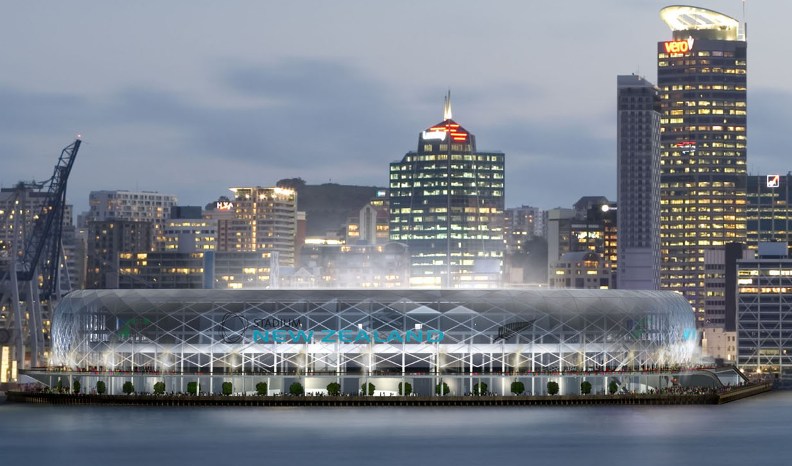
Monday, October 16, 2006

Pay it Back NOW!

With Labour’s announcement that it will repay the $800,000 of public money it spent on last year’s election, it’s worth examining Labour’s claim to be poor.

The Labour Party is the most asset-rich of all registered political parties. It uses the income from over $6 million in property assets to fund election activity.

The New Zealand Labour Party is an unincorporated society. As such, it is not required to report its finances, and is not subject to the audit requirements of incorporated societies and limited liability companies. It is generally understood that in a non-election year, Labour’s annual budget of $1.5 million is funded primarily from income from property assets, subscriptions from affiliated unions, and a core membership of around 5,000 members.

The downside of being an unincorporated society is that the New Zealand Labour Party is not permitted to hold property. Instead, property is owned by a selection of private trusts and incorporated societies that receive beneficial tax status, and hold that property on behalf of the New Zealand Labour Party.

A selection of Labour’s property assets includes:
Dannevirke Labour $15,700
Greymouth Labour Branch $40,000
Labour Properties Inc $4,800,000***
NZ Labour Party Clubrooms Inc $140,000
Picton Branch $11,000
Thames Branch $83,000
Dunedin South $770,000

Labour’s wealth outstrips National’s asset base by a factor of 10-1. National’s only property asset—a floor of Willbank House in Willis Street—is valued at around $700,000. Labour’s claims to be poor simply don’t stack up. It begs the question why a party with such a large property portfolio needs ten months to repay misappropriated spending from last election.

Helen Clark is asking Labour’s core supporters to front up and take responsibility for this. The answer to Labour is simple: if Labour’s caucus, who are responsible for the over-spend, can’t front up with the cash immediately, then Labour should mortgage or sell some of its massive property portfolio.

***UPDATE: I used some conservative estimate of the value of the portfolio in Labour Properties Incorporated, pending valuation reports which I have now received for each of the eleven properties owned by Labour Properties Incorporated.

As of this afternoon, I now have a full break-down of rating valuations for all the properties in Labour Properties, with the exception of one. The numbers are:
Fraser Body House $4,000,000
7 Fulton Crescent $330,000
1/332 Massey Road $416,000
300 Great North Road $470,000
Palmerston North $203,000
Domain Avenue $105,000
4 Regent Road Dunedin $440,000
203 Warrant Street North$223,000
651 Ferry Road ChCh $130,000
1 Pharazyn Street $240,000
Total $6,557,000

A *very* conservative estimate of the Takapuna property--prime commercial real estate on the North Shore--is $2 million. All up, Labour's assets are much closer to $10 million.

Friday, October 13, 2006

Remembering Waterloo...

I am not a person who begs or offers compromise. There is no such thing as half-sin. I admit that I can be occasionally dogmatic. Occasionally, some might say that I take an unreasonably intractable stance. I loathe socialists. I dislike liberals. I hold the entire Labour Party in contempt. There’s just far too much tolerance for the kind of dishonest, incompetent shits who will preside over $25 billion in fiscal surpluses over the last three years and look you in the eye and say there has been no money for tax cuts.

Fuckers. That’s what they are. There is no room for justification for that kind of dogmatic incompetence that is starving the New Zealand economy of productive growth.

Labour is now wriggling and writhing with anything but contrition for stealing $800k of taxpayer’s money to outspend everybody else during the election campaign. Their hastily-compiled thebigwhiparound will show them just how much support they have lost from their own voters. Labour has fewer than 5,000 members—less than a quarter of National’s membership. Political parties generally find it notoriously difficult to fund-raise outside an election year at the best of times. Labour has no financial reserves: they spent their entire war chest at the last election, and dipped into public funds to outspend everybody else, because they didn’t have any cash of their own left. Labour is very lucky that the Auditor-General did not have the power to require parties to pay back the overspending: if they had, Labour would be looking down the barrel of insolvency as a political party.

Labour is now in Government due to the choices of 22,753 voters who swung to Labour instead of National. That’s less than 1% of the vote. Labour also misused some $800,000 of public funds to outspend everybody else during the election campaign by the same amount. It is all very well for slimy pinko activists to say that the pledge card had little effect on the result—except that Labour’s own strategists claimed before the election that its pledge card was the key plank of Labour’s campaign. It’s also clear that Labour’s massive publicly-funded electioneering—which amounted to a 40% publicity boost over National, particularly in the critical last few days of the campaign—must have had some effect. Just how effective it was can be disputed, but the effect of Labour’s taxpayer-funded spend-up has put the 2005 election result as a whole in doubt.

Ordinary Labour members aren’t going to cough up $200 each to fund the corrupt actions of Labour’s caucus. Labour’s leadership is in a state of delusion if it believes that Labour’s members will front up with cash.

Of course, Helen Clark and Mike Williams need to put up the pretense of exploring all avenues possible before hitting up Labour’s own caucus for the balance of what it owes. $20,000 per MP will hit them hard in the pocket, and will cause serious rumblings within caucus. That won’t be soothed by Labour’s slide in the polls, and the prospect that many sitting MPs will be turfed out will make them even more anxious and unhappy.

The three options for Labour are:

  1. Limit third-party funding of attack campaigns. Big consequences on freedom of speech, this is Labour’s Exclusive Brethren cause. Labour thinks it’s harming National, allegedly on the basis of Exclusive Brethren political activities in the last election. The National Party doesn’t need the Exclusive Brethren. They were a pain in the arse last election, and an embarrassment to National because of their political naivety. The EBs spent fairly large amounts of cash last election, with no positive return to National. Really, banning the Exclusive Brethren from campaigning is a blessing for Don Brash.What also occurred during the campaign was massive amounts of spending and activity by trade unions supporting the Labour Party by attacking National. They will also be covered by this clause, and limited in their campaigning.
  2. Limit anonymous donations to political parties. Labour is convinced it’s onto a winner here, despite the fact that Labour has received more in anonymous and corporate donations than National in all but one of the last seven years. Labour will also taunt National with the prospect of lowering the threshold for declaration of anonymous donations, from $10,000 to $500. That action is likely to publicly disclose the identities of more than 1,000 National Party members. There is no public policy reason for this. Labour’s sole purpose is to allow Labour Party retribution against individual National Party members who do no more than express their democratic right to support a political party that isn’t Labour. Except the political landscape has changed since the last election. For far too long the socialists have done their utmost to effectively communally outlaw any non-PC agenda. Just weeks ago, Pete Hodgson issued eight press releases in seven days calling on Don Brash to resign. His sole argument was that Don Brash doesn’t share Labour Party values. In an hysterical flurry of interviews that shrieked of Labour’s desperate last gasp towards totalitarianism, Hodgson proclaimed: “It is a fact that Don Brash cannot be Prime Minister. He must go. [Because we say so.]” Labour has now put itself in the position of having no chance of winning the next election. There will be no retribution from Helen Clark if somebody chooses to give $1,000 to National. My response to National members is go ahead and give all you like to the National Party. Do it publicly. Stand up and be counted. Don’t cower at Helen Clark’s threats of bullying.
  3. Public funding of political parties. Labour is already appealing to members to fund last year’s election. Their only means of evening the playing field, as they see it, is to penalize National by as much as possible, and provide for public funds for themselves. Voters will not support Labour’s argument for state funding: they may have done so before the overspending fiasco, but not now. Even Donna Awatere Huata, who faced the consequences of misappropriating Pipi Foundation resources for her private benefit, turned down a bonus payment from Pipi. Helen Clark is showing just how shameless she is by proposing a public funding bonus for taking taxpayer’s money she wasn’t entitled to.

There is nothing that Labour can now do to prevent a massive hemorrhaging of voter support between now and the next election. Labour is careening towards a long period in opposition. As with National from 1998 onwards, Labour has to start thinking about first principles, renewal, new leadership, and revival. The sooner it starts acting on it—and it can only do so while it is not desperately trying to hold onto the Government benches they obtained illegitimately—the sooner Labour will become a political force again.

National, on the other hand, has become the defacto Government-in-exile. Don Brash has to continue acting as the Prime Minister in waiting, with only the next election and a massive endorsement from a public sick and tired of Labour’s ineptitude, incompetence, socialist mind-control and corruption, standing between New Zealand voters and responsible government.

My advice to Labour is to do whatever you like to punish the National Party for Labour’s own disgraceful lying, cheating, and theft. Whatever vindictive actions you take now, you will not succeed in cheating voters out of responsible Government next time. Change the rules to make it easier for you steal money again, and the public will thump you harder at the polls.

My advice to Don Brash is to start talking about his first acts as Prime Minister, once voters have turfed out this torrid, awful government. Announce that his first move will be to cut any proposed state funding of political parties, and get parliamentary noses out of public troughs. Whatever Labour do to feather their own nests, Don Brash will reverse. Don Brash’s rules—no public funding of promotion of any parliamentary activities in the three months prior to an election—will eliminate electioneering rorts from Labour happening again. A full commission of inquiry by an independent and respected High Court judge, examining all of the allegations of misdeeds by all political parties and their associates, will take the self-serving interests of MPs out of their hands, and do much more to restore credibility in New Zealand’s parliamentary democracy.

I expect in the next week or so, Don Brash and Judy Kirk will announce an important National fundraising campaign to prepare National for the next election. They believe it will be sooner, rather than later. Unlike Labour supporters, aggrieved at being asked to pay for Labour MPs' wrongdoings, National supporters will be paying for a genuine cause of change.